]]>
Why doesn’t my health provider know anything about cannabis?
Recent data suggests that only 9% of medical schools have anything regarding medical cannabis listed in their curriculum, and it’s only recently that professional medical societies and associations have begun to provide education units in an effort to bridge this gap.
In the meantime, this knowledge deficit perpetuates a number of issues for patients simply seeking medical advice from their trusted health providers. Too often, patients who want to use cannabis report that their questions about cannabis are outright dismissed and sometimes ridiculed. And in subjectively worst case scenarios, their health providers exploit any mention of cannabis to springboard into a discussion of substance abuse. Simply put, these interactions are not helpful.
Your health provider faces challenges too.
Health providers are inundated with patients, their case loads are extensive (death by documentation anyone?), and their employers may enforce strict policies that quite sadly prevent them from providing care that you, their patient, deserve, and they, the professional who dreamed of saving and improving lives, should be able to provide without issue.
In Utopia, this would occur day in, day out. But if you’ve looked around lately, we are far from Utopia in the health care industry where profits are the priority and moral injury among health providers is normalized. (A digression for another article perhaps?)
Also, there is a general fear among health providers that advocating for cannabis, a federally illicit substance, may cause medical facilities to lose federal funding. Unfortunately, this rough edge may mean that advocating for cannabis can cost a health provider their job.
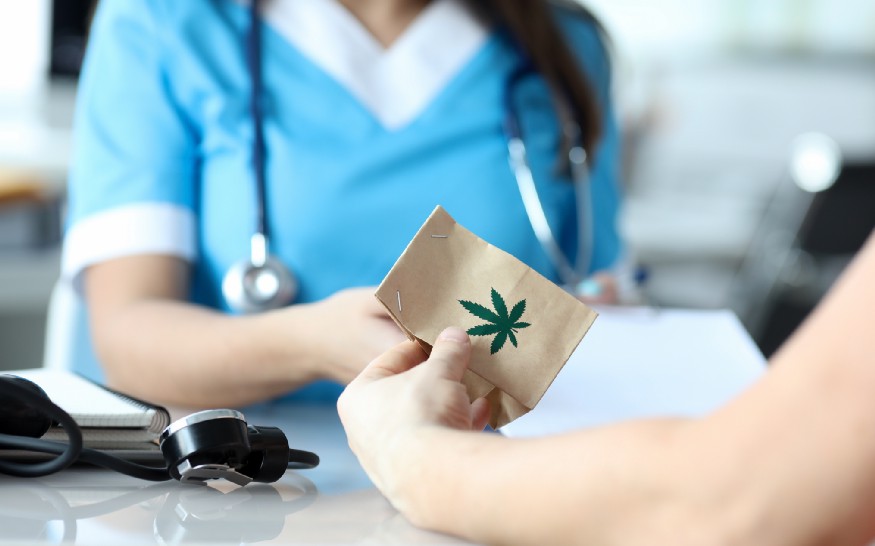
So what’s the solution? How do I get the help I need from a health provider despite these challenges?
Rescheduling or descheduling cannabis, lifting federal prohibition, and allowing the medical and science communities to study cannabis in the manner in which it needs to be studied for the greater good of human beings everywhere will ultimately resolve these problems over time. But for now, here are some steps you can take to help your provider help you meet your health goals.
- Choose the right provider. Health providers who work outside of the medical system exist. Their service offerings may extend far beyond what is offered inside of conventional medical offices. There are many highly qualified health providers in the spectrum of integrative medicine, holistic health, and complementary care fields who understand the therapeutic value of cannabis as well as the endocannabinoid system. They may even provide medical cannabis certifications and recommendations. Seek these health providers out. Not only can they help you meet your goals, they may be able to help you advocate for yourself in conventional medical settings. The only drawback is that these providers may not accept health insurance. Your health is invaluable and worth the investment. This being said, ask if they work on a sliding scale if you need financial assistance, the answer may pleasantly surprise you.
- Do your own research. There is a plethora of information regarding cannabis therapy, the endocannabinoid system, health conditions, you name it — it’s available on the Interwebs. Unfortunately sifting through all of the information is overwhelming, and understanding whether or not a resource is quality or junk is not always easy to ascertain. Thankfully, there are websites like this one, ProjectCBD.org, and Healer.com for easy to digest and understand articles, videos, and other educational materials about all things cannabis and health. You could even bring some of these materials to your next health provider consultation. Health providers like evidence and both of these web places provide evidence that they value. Don’t forget to bring an article about the Endocannabinoid System!
- Tell your provider how cannabis has helped you. Health providers tend to want their patients to feel better, they want to see symptoms resolve, and quality of life to improve. If you use cannabis and you are faced with a provider who is less than knowledgeable and therefore rejects cannabis use, plant some seeds. They may be amenable to learning a little bit about why and how cannabis helps you. If they’re not, move on to a health provider who is willing to listen. You have the right to feel better, to heal, and to work with health providers who are committed to helping you do so.
Inhaled cannabis takes effect within minutes, is easy to titrate up as needed, and has the shortest peak time out of all of the administration methods. Basically, inhaling cannabis gives the consumer the most control over their experience. These are some of the reasons why cannabis consumers prefer inhalation, especially smoking. But is smoking cannabis safe? Well, the answer in my nurse opinion — smoking is never completely safe. There is plenty of evidence to suggest that smoking is not the safest or healthiest method of cannabis administration, mainly from the people who smoke cannabis. Reports of sore throats, bronchitis, sinus congestion, sinus infections, and frequent colds are not uncommon among cannabis smokers.
Why do cannabis consumers report these symptoms?
Inhaling smoke exposes the sensitive throat, airway, and lungs to irritants like heat, toxic chemical compounds such as carbon monoxide, and tar. Plus, plant material is often burned with paper or cigar wraps which increases toxic chemical exposure. Mucous membranes found throughout the respiratory system are designed to protect against viruses, bacteria, dust, mold, and allergens. These mucous membranes become irritated and inflamed when exposed to heat, plant debris, and chemicals. As a result, the owner of these inflamed mucous membranes may find it difficult to fend off colds and other yucky illnesses.
On top of this, many cannabis smokers inhale very deeply and hold their breath which is erroneously thought to increase the high experienced from cannabis. Doing so causes a little oxygen deprivation which may cause dizziness acutely. This little bit of dizziness is often mistaken for an increased high. This habit may also cause damage to the brain long-term as the brain never likes to be without oxygen. So if you’re holding your hits in, you may want to consider changing this habit.
At risk for heart disease? Have heart problems? Work with qualified health provider to determine if cannabis use is safe.
In addition to irritating the respiratory system, the products of combustion inhaled as a result of smoking cannabis may also be detrimental to heart health. According to Harvard Medical School, cannabinoids have a complex impact on the cardiovascular system, producing dilated blood vessels and increased heart rate. Certain cannabinoids may also cause the heart to beat harder. For these reasons alone, it is important for a person with heart disease, or a history of heart problems to work with a qualified health provider to determine if cannabis is safe to use. Generally, people with heart and lung conditions should avoid smoking.
Harm reduction happens with vaporization.
It’s important to note that cannabis promotes healing in the body if consumed in a therapeutic way. There are many therapeutic methods of cannabis administration to try. A safe alternative to smoking cannabis flower is vaporization.
Vaporization is the process by which cannabis flower is heated to a temperature below its point of combustion (392°F) that effectively releases cannabinoids from the trichomes (the resin glands.) The resulting vapor is then inhaled. Since the cannabis flower is not heated to the point of combustion, and fire is not the heating element, less respiratory irritants and toxic chemicals are produced. As a result, vaporization greatly reduces or eliminates the negative impacts that smoking cannabis can produce which means more benefits from the cannabinoids can be enjoyed, and bouts of yuck related to smoking cannabis can be avoided.
There are many vaporizers available on the market ranging from discreet handheld devices, to large table top devices. A heating source combined with a delivery appliance comprises most vaporizers, yet the models available on the market are as varied as cannabis strains. If you’re shopping for a vaporizer, make sure you do your research. You’ll want to scoop up a vaporizer that produces a high percentage of vapor and a very low percentage of smoke to maintain your health and safety. It’s a worthy investment into your health and well-being. And in case you were wondering, you deserve to be well.
Consumption Methods. https://www.medicaljane.com/category/cannabis-classroom/consuming-cannabis/#smoking-cannabis
Marijuana Myths: Does Holding In Hits Get You Higher? Retrieved from http://herb.co/2015/09/18/marijuana-myths-does-holding-in-hits-get-you-higher/
Marijuana and heart health: What you need to know. https://www.health.harvard.edu/heart-health/marijuana-and-heart-health-what-you-need-to-know
Respiratory Effects of Marijuana. http://adai.uw.edu/marijuana/factsheets/respiratoryeffects.htm
Sulak, D. Introduction to the Endocannabinoid System. http://norml.org/library/item/introduction-to-the-endocannabinoid-system
Teague, C. New Study On Cannabis And Heart Health Has Sparked Debate. Retrieved from http://herb.co/2017/08/14/cannabis-heart-health/
Vaporization https://www.medicaljane.com/category/cannabis-classroom/consuming-cannabis/vaporization/#introduction
Cannabis as a therapeutic is different from conventional medicines in that it often requires a willingness to learn and explore to find the therapeutic range that works best for an individual. The therapeutic range of cannabis is massive. One individual with XYZ condition may require a very small amount of cannabis to improve their symptoms, while another individual with a similar condition may require much larger amounts to meet their health goals. With an ever-evolving body of evidence to support the use of cannabis to improve medical conditions, a long list of delivery methods, a wide-variety of product offerings, and a plethora of less than stellar information available on the Interwebs and social media, it’s no surprise that the C in cannabis also stands for CONFUSING according to one of my patients. I can’t say I disagree.
Adding to this confusion, many of my patients are struggling; they’ve often exhausted all other therapeutic options from the conventional medical field. They’ve turned to cannabis in hopes that there is something available to them that will finally improve their symptoms and ultimately, improve their quality of life. But it is confusing. Struggling with significant, unrelenting symptoms is not an empowering position, so trying something new that requires time, effort, and self-exploration can be a frustrating process without proper guidance. It can also be quite expensive, so I do recommend that anyone who is seeking consistent symptom relief work with a cannabis-literate health professional to help them achieve their health goals in a timely manner that doesn’t break the bank.
But first things first! Did you know you have an endoCannabinoid System (ECS)?
Yes! You do! Everyone has an endoCannabinoid System, a network of receptors found in the cell membranes throughout the body that interact with cannabinoids. Cannabinoids can be thought of as keys and the cannabinoid (CB) receptors can be thought of as locks. There are two primary cannabinoid (CB) receptors – CB1 and CB2. When the cannabinoid keys open the CB receptor locks, chemical messages are sent along the neurons, or nerve cells in the body. Communication happens between neurons, and functional changes happen to promote homeostasis – a stable internal environment despite fluctuations in the external environment. The full expanse of the ECS function is still being discovered, but we do know that it helps to regulate sleep, appetite, mood, and memory. It is thought that deficiencies in the tone of the ECS results in disease. This is where cannabis-based products can come into play.
Cannabis delivery methods for the newbie
Tinctures, edibles, flower, vape, grams, ounces – the list goes on. To the uninitiated lay person, these terms have the propensity to catapult anyone seeking relief from chronic symptoms into a stressed state. Thankfully, a little cannabis has the propensity to help to relieve that stress. But first, which products would help with that? How should one take said product? Here you’ll find a quick guide to understanding different cannabis product offerings, what one could expect to experience in each category, and some tips for experiencing symptom relief with less trial and error and more conscious self-exploration.
| Delivery Method | Product Offerings | Onset – How long till effects are experienced? |
Duration – How long will effects last? |
Benefits | Disadvantages |
| Topical | Creams, salves, bath bombs, sprays | Varies | Varies | Discreet, localized, non psychoactive effect | May have short duration or take an extended time to work |
| Inhalation – Smoking/ Vaporization |
Flower, vape pens | 1-15 minutes | 2-6 hours | Provides quick to immediate feedback, easy to increase for desired effect. | Short duration, greater potential for abuse or misuse.
Easy to take too much resulting in negative side effects such as paranoia and tachycardia May not be discreet due to scent Increased risk for irritation to sinuses, throats, lungs from inhaling combusted plant material via smoking. Increased risk for toxin-exposure – cannabis oil in vape cartridges may be combined with chemical thinning agents (PG, VG, PEG) that can be carcinogenic when heated |
| Ingestion/
Oral |
Edibles – gummies, capsules | 1-2 hours | 6-12 hours | Discreet, ideal for extended relief of symptoms | Easy to take too much resulting in negative side effects such as paranoia and tachycardia |
| Sublingual | Tinctures, sprays, dissolvable strips | 10-45 minutes | 2-8 hours | Discreet, ideal for extended relief of symptoms | Easy to take too much resulting in negative side effects such as paranoia and tachycardia |
| Transdermal | Patches, gel pens | 15 minutes to 1 hour | 4-8 hours | Discreet, full body effect | May take an extended time to work; may irritate skin |
| Suppositories | Vaginal, rectal | Varies | Varies | Discreet, potential for use for individuals who cannot consume via mouth, potential for localized effects | Potential for poor absorption resulting in limited to no effect |
Chart: Clark, C. S. (2021). Cannabis: A handbook for nurses. Philadelphia, PA: Wolters Kluwer.
Strategies for more symptom relief and less negative effects – Start low and go slow
To improve symptoms effectively, it’s essential to try a dosing strategy that starts with a low dose of cannabis and includes small dose increases over a few days until symptoms are better controlled. Start low and go slow is a concept that should be applied to the use of all cannabis products, especially when it’s new to you, even if you are a very experienced user.
A cannabis journal or tracking app may be helpful to naive and experienced users alike – you can keep track of the products you are using, the doses, when you need to increase, and most importantly, you’ll see how cannabis is helping you. Or if your plan needs to be modified.
Finally, it’s important to understand that cannabis is only one tool in the self-care toolkit. For best results, it’s essential to consume a whole-foods diet, stay adequately hydrated, move your body most days of the week for a minimum of 30 minutes, take care of your mind with meditation or other mindfulness practices, and get adequate rest. The coolest thing ever is that all of these activities help to improve the tone and functioning of the ECS on their own! So you might as well engage in these health-improvement and maintenance activities which will help you not only improve the functioning of your own, unique ECS, your cannabis experience will likely be a little more fun too. If that’s what you’re going for!
Remember to discuss any health concerns with a medical provider. This article is intended for educational purposes only and is not intended to diagnose, treat, cure, provide medical advice, or otherwise replace consultation with a qualified medical or health provider.
]]> “Azalla” gives us a reference for how long humans have known about the therapeutic use of Cannabis sativa (the plant formerly known as marijuana). It is likely that early humans were using this plant far before cuneiform writing was developed. From this perspective, the modern atrocity of cannabis prohibition is a short (albeit destructive) period of time. At Azalla Education, we work towards the end of cannabis prohibition and stigma with gratitude towards our ancestors, our growers, our herbalists and medicine-makers, and all of those who have suffered due to the pointless ban of this useful and therapeutic plant.
]]>
“Azalla” gives us a reference for how long humans have known about the therapeutic use of Cannabis sativa (the plant formerly known as marijuana). It is likely that early humans were using this plant far before cuneiform writing was developed. From this perspective, the modern atrocity of cannabis prohibition is a short (albeit destructive) period of time. At Azalla Education, we work towards the end of cannabis prohibition and stigma with gratitude towards our ancestors, our growers, our herbalists and medicine-makers, and all of those who have suffered due to the pointless ban of this useful and therapeutic plant.
]]>